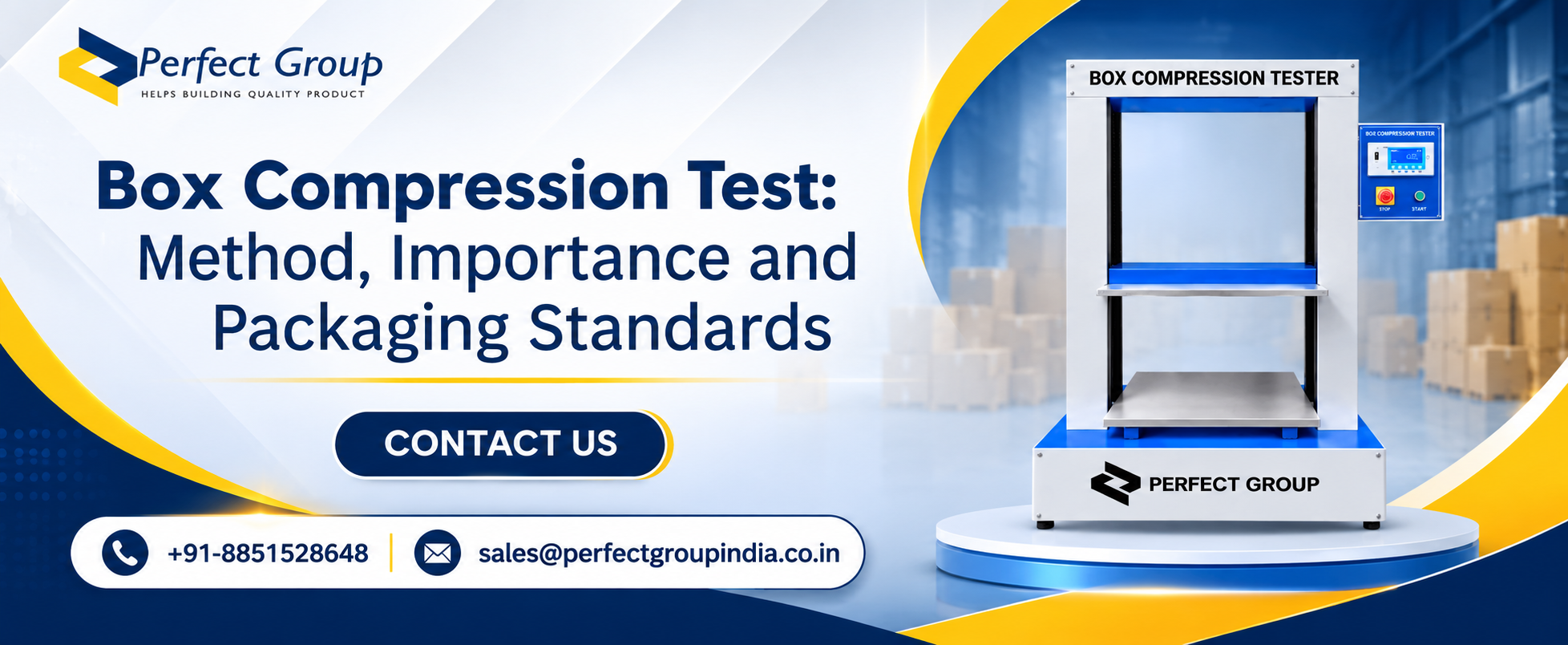
Box Compression Test: Method, Importance and Packaging Standards
Introduction
A box compression test measures the maximum vertical compressive force that a shipping container or a cardboard box can handle before it experiences major deformation or structural failure. It helps package manufacturers to measure stacking strength, improving carton design, and maintaining standard packing quality during transportation and storage.
For cardboard boxes used in warehouses, distribution centers, logistics operations and product delivery, the box compression test (BCT) is highly important. Manufacturers can learn how packing functions under actual stacking and handling situations by testing the whole box structure.
What is the Definition of a box compression test?
A box's potential to support a weight applied vertically through its top and bottom surfaces is measured using a box compression tester. The box is positioned between two parallel compression platens during testing. Until the required load, deformation limit, or failure point is achieved, the machine steadily adds force.
The final result shows the package's maximum compression load and, if measured, the deformation that took place during loading.
Working Principle of a Box Compression Testing Machine
The operating concept is based on controlled vertical compression. The bottom platen supports the box, while the higher platen is moving forward with a set speed.
As the load increases, the box walls and corners support the compressive stress. The equipment monitors the applied force and also can measure platen movement or box deformation.
The compression strength result is calculated using the peak load before failure or the specified test endpoint. A controlled loading rate and well placed plated surfaces result in repeatable readings.
Box Compression Test Method: Step-by-Step Procedure
A reliable Box Compression Test requires sample preparation and testing conditions.
-
Prepare the sample: Choose sample boxes from the production batch. Inspect them for visible damage, smashed corners, damp stains, and manufacturing defects.
-
Condition the package: Before testing, keep samples within the specified temperature and humidity range. The material is moisture-sensitive, therefore treating helps in reliability.
-
Prepare the package: Assemble and close the carton according to the folding, sealing, and packing instructions. It may be tested empty or full, depending on the desired use and test need.
-
Position the sample: Place the box properly on the lower platen, with its base flat and vertical walls perfectly positioned.
-
Apply compression: Start the machine and allow the upper platen to apply a slowly increasing load.
-
Record the results: Note the maximum load, deformation, failure pattern and any similar observations.
-
Evaluate the performance: Compare the results with the packaging specification, product requirements or planned acceptance criteria.
Why Box Compression Strength Matters
The Box Compression Tester helps understand if cartons can support the weight of packages stacked above them without excessive crushing.
Insufficient compression strength can cause carton deformation, product damage, unstable pallet loads or packaging failure during transport. These risks can increase when boxes are stored for long periods or exposed to changing environmental conditions.
Factors Affecting Box Compression Test Results
Many factors affect the measured compression strength:
-
Box dimensions: Height, length and width affect the structural behaviour of the carton.
-
Board construction: Single-wall, double-wall or triple-wall paper board can provide different load handling properties.
-
Moisture content: High humidity can weaken paper based packaging and reduce compression resistance.
-
Loading conditions: Load distribution, platen alignment and compression speed influence the test.
-
Sample condition: Damaged corners, poor joints, crushed flutes or unstable sealing can reduce the result.
-
Contents and internal packaging: Products or inserts may support the box walls and change its compression performance.
Box Compression Test vs Edge Crush Test vs Bursting Strength Test
These tests measure different packaging properties and should not be treated as interchangeable.
Box Compression Test (BCT): Measures the compressive strength of a complete box or container under vertical loading.
Edge Crush Test (ECT): Measures the edgewise compressive resistance of a cardboard board specimen. It helps check board quality and helps to expected finished-box compression performance.
Bursting Strength Test: Measures the pressure required to burst the surface of paperboard or cardboard board. It checks resistance to bursting rather than the vertical stacking load of a finished carton.
Using these tests together gives manufacturers a more complete understanding of packaging performance.
Relevant Box Compression Testing Standards
The right standard depends on if the test involves a finished transport package, an individual carton or a specific packaging requirement.
-
ASTM D642: Covers compressive resistance testing of shipping containers, components and unit loads, with or without contents.
-
ISO 12048: Specifies compression and stacking tests for complete, filled transport packages using a compression tester.
-
IS 2771 (Part 1): Covers general requirements for cardboard fibreboard boxes in India. It includes edge-crush-related requirements, while compression strength requirements may be specified according to the purchaser’s application.
Improve Packaging Quality with Reliable Testing
A properly conducted Box Compression Test helps manufacturers identify packaging weaknesses before cartons enter the supply chain. It supports better carton design, safer stacking, reduced product damage and consistent quality control.
Perfect Group India offers testing solutions for packaging and material analysis. Explore the Box Compression Tester and the Paper and Packaging Testing Instruments category to learn more about packaging testing equipment..