What is a Polariscope? Its Importance and Uses
Introduction
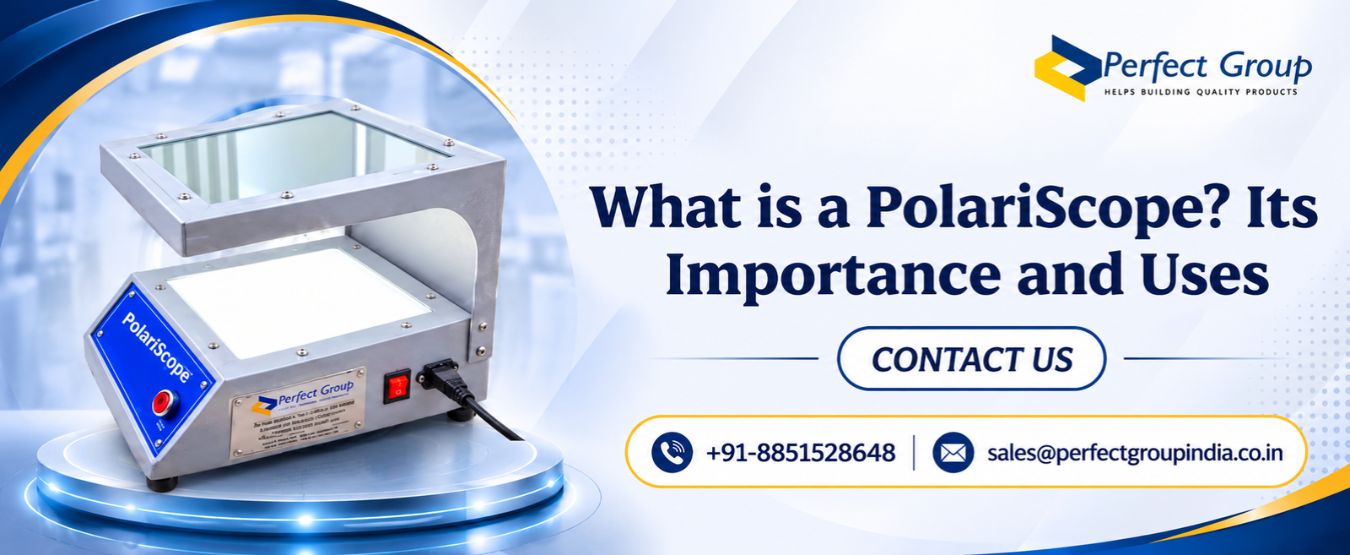
A Polariscope is an optical testing instrument used to find internal stress, strain distribution and optical issues in transparent or translucent materials such as glass, plastics and PET preforms. It works by passing polarized light through a specimen and observing changes in light patterns caused by internal stress. These patterns help manufacturers identify stress concentrations, uneven material changes and potential processing defects that may not be visible during ordinary visual inspection.
In industrial quality control, a Polariscope is mainly useful for examining PET preforms, plastic bottles, glass containers and moulded components. It supports manufacturing inspections by helping quality control teams check material similarity before products move to manufacturing production stages.
What Is the Working Principle of a Polariscope?
A Polariscope operates on the principle of photoelasticity and birefringence. It generally includes a light source, polarizer, sample holder and analyzer. The polarizer converts ordinary light into polarized light, which passes through the test specimen before reaching the analyzer.
When a transparent material contains internal stress, its optical properties change and produce a phenomenon called birefringence. This results in the appearance of unique light and dark patterns or coloured edges. Operators can spot differences in material rotation and stress distribution by looking at these patterns.
What Are the Main Uses of a Polariscope?
A Polariscope has several applications in industrial material inspection:
-
PET preform testing: Identifies uneven stress distribution, molecular orientation and processing related irregularities in preforms.
-
Plastic manufacturing: Helps inspect leftover stress in transparent plastic sheets, bottles, lenses and injection moulded components.
-
Glass manufacturing: Examines stress in glass bottles, jars, containers and other glass products.
-
Packaging quality control: Supports inspection of transparent packaging components to achieve manufacturing stability.
-
Optical component inspection: Helps examine stress related optical irregularities in transparent components.
Why Is Polariscope Testing Important in PET Preform Manufacturing?
PET preforms are injected, cooled and then blow molded. Uneven molecule structure and remaining stress can be produced by changes in cooling, material flow and processing conditions.
Such differences are observable through unique optical patterns in a Polariscope stress viewer. Manufacturers can look into any problems with the moulding process by comparing the observed patterns with reference defect charts.
Before preforms are turned into completed bottles, this check helps find irregularities, improving process control and reducing the possibility of unnecessary manufacturing defects.
What Are the Advantages of Using a Polariscope?
-
Non-destructive inspection: Examines internal stress patterns without cutting or damaging the specimen.
-
Early defect identification: Helps identify stress related irregularities before further processing.
-
Improved quality control: Supports continuous inspection of glass and transparent plastic products.
-
Process monitoring: Helps manufacturers find variations related to moulding, cooling and finishing.
-
Visual stress analysis: Makes invisible optical stress patterns easier to observe.
Visual stress testing should not be seen as an analytical method to measure stress. The equipment setup, measurement, sample properties and suitable research technique all affect accurate testing.
How to Perform a Polariscope Test?
A typical inspection involves four steps:
-
Prepare the specimen: Clean the sample and ensure it is suitable for optical examination.
-
Position the sample: Place the glass or plastic specimen within the viewing area.
-
Observe under polarized light: Examine the specimen through the analyzer and observe the resulting optical patterns.
-
Interpret the results: Compare the observed patterns with appropriate reference charts or measurement standards to test stress related irregularities.
For optical properties measurements of standard refraction and remaining strains in transparent or translucent polymers, ASTM D4093 offers a practical reference based technique for plastic testing.
How to Choose the Right Polariscope for Industrial Testing?
The material being examined, sample size, viewing area, lighting system, optical arrangement and simplicity of test pattern reading should all be factored carefully when choosing a Polariscope. Also, manufacturers should consider if a digital inspection system or a traditional optical strain viewer better meets their quality control needs.
Compatibility with preform dimensions and suitable defects reference charts are especially important for PET preform manufacturers. The sample geometry and remaining stress testing requirements should be taken seriously by glass product manufacturers.
Improve Material Inspection with the Right Polariscope
Finding defects that regular visual inspections could miss is the first step in a reliable material examination. In order to help with quality inspection in packaging, plastic and related manufacturing processes, Perfect Group India provides industrial testing equipment. Discover suitable testing options for your laboratory and production needs by looking over our selection of testing instruments.
Contact Perfect Group India to discuss your Polariscope requirements and identify an inspection solution suited to your materials, sample dimensions and quality control process.