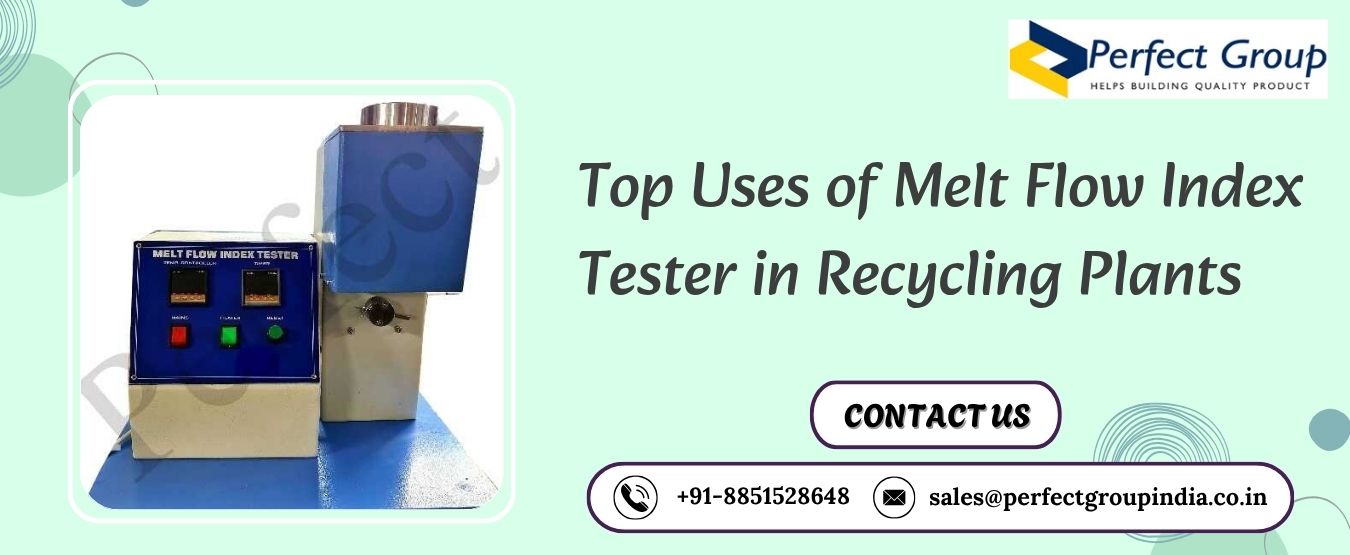
Top Uses of Melt Flow Index Tester in Recycling Plants
Introduction
The Melt Flow Index Tester is a piece of equipment used in laboratories to analyse how thermoplastic polymers flow under specific load and temperature conditions. Melt flow testing is used in plastic recycling facilities to check the quality of recycled materials, find serious processing or harmful changes and help in making quality control choices. Recycling facilities can monitor recycled granules, confirm incoming materials, solve process differences and decide if a recycled polymer meets the requirements for a specific manufacturing use by comparing MFI/MFR values between batches.
Why is Melt Flow Testing Important in Recycling Plants?
A useful method for recyclers to keep an eye on batch differences and material quality is melt flow testing. Changes can happen in recycled plastics because of changing materials, pollution, mixing, continuous thermal processing or different processing times.
A Melt Flow Index Tester can therefore support:
-
Inspection of incoming recycled plastic
-
Stability checks between batches
-
Quality inspection for recycled grains
-
Verification of supplier materials
-
Comparison of virgin and recycled materials
-
Procedure troubleshooting
-
Quality control of finished recycled resin
-
Decisions about blending and production
How Does a Melt Flow Index Tester Work?
A standard Melt Flow Index Tester works according to a specified order:
-
Make a sample of a suitable polymer.
-
Choose the right load and temperature.
-
Warm up the device.
-
Put the polymer inside the barrel that has been heated.
-
Apply the selected load.
-
Let the molten polymer flow through the die.
-
As needed, gather or measure the extruded material.
-
Record the outcome and compare it with the requirements or previous data.
What Materials Can Be Tested?
With suitable thermoplastic materials, such as polyethylene (PE), polypropylene (PP), ABS and other approved thermoplastics, melt flow testing is often used. Tests can also be performed on recycled plastic pellets, reprocessed polymers, plastic granules and specific thermoplastic compounds.
But not every polymer is a good fit for every Melt Flow Index Tester use. Before testing, it is important to confirm the material, test method, temperature, load, die setup and necessary standard.
What Does Melt Flow Testing Tell Recyclers?
Information regarding polymer flow behaviour under specified test conditions is provided by a Melt Flow Rate Tester. Data can be used to monitor processing effects, compare batches and suppliers, identify material differences and improve the analysis of the quality of recycled resin.
Tensile strength, impact strength, elongation, hardness, density, thermal stability and molecular weight distribution should not be directly measured by MFI. Melt flow behaviour can be affected by modifications in polymer structure and processing history.
Which Standards Apply to Melt Flow Testing?
The polymer and desired use define if an approach is suitable. ISO, ASTM and BIS are approved organisations. Melt flow testing is often connected to standards like ASTM D1238 and ISO 1133.
Verify the necessary test temperature, applied load, die size, sample preparation, conditioning process, and reporting technique before buying a Melt Flow Index Tester.
How Does MFI Testing Improve Recycling Quality Control?
Before irregular recycled resin reaches lower manufacturing, laboratories can detect any material difference with the help of an MFI Tester. Incoming inspection, pellet testing, supplier verification, batch comparison, production monitoring and customer specification checks can all be combined with testing procedures.
Instead of a set timetable, testing frequency should be based on material range, production volume, material risk, process stability, customer needs and the right testing techniques.
Conclusion
Because it assists in measuring melt flow behaviour, comparing recycled batches, track material similarity and supporting quality control choices, a Melt Flow Index Tester is a necessary part of laboratory testing for plastic recycling. When used in combination with the polymer grade, processing history, test conditions and related standard, MFI data are most helpful.
The polymer being tested, necessary temperature and load, suitable method, testing volume, measurement requirements, adjusting needs, maintenance and post-purchase technical support should all be considered advantages when choosing equipment from Perfect Group India.