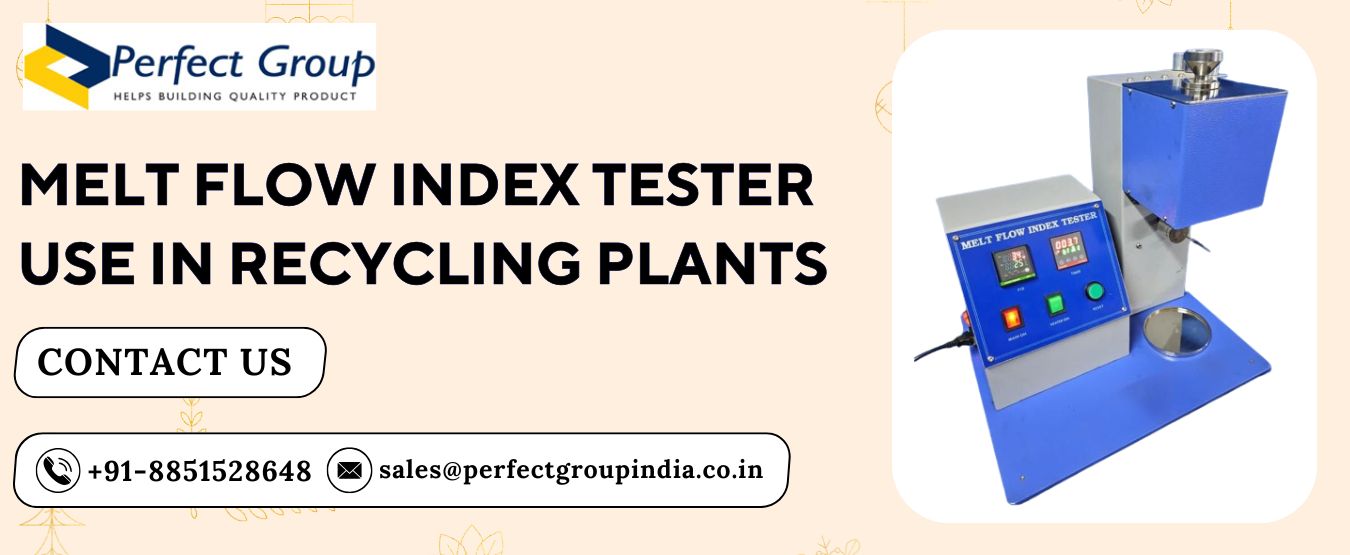
Melt Flow Index Tester Use in Recycling Plants
Introduction
The Melt Flow Index Tester plays an important role in recycling systems because it measures how easily recycled plastic flows under set temperature and load conditions. This simple but important test helps recycling facilities in checking material quality and consistency, detecting batch differences and selecting the right processing settings before extrusion or moulding. Effective melt flow testing reduces production difficulties, increases recovered polymer quality and guarantees smooth manufacturing throughout plastic recycling plants.
What Is a Melt Flow Index Tester?
A Melt Flow Index Tester is a laboratory instrument that measures the flow properties of thermoplastic materials under controlled testing conditions. It calculates the amount of polymer that goes through a standard die in a specific period of time, helping producers in understanding processing properties and material behaviour.
It is widely used for quality control in recycling facilities, plastic compounding units, research laboratories and industrial operations that process virgin or recycled polymers.
Why Is a Melt Flow Index Tester Important in Recycling Plants?
A Melt Flow Index Tester helps recycling plants in maintaining continuous material quality before polymers are reused in manufacture. Because recycled plastics can come from many sources, testing makes sure that each batch fits the specified processing requirements.
Routine melt flow testing helps:
-
Find irregular recycled materials.
-
Improve the product quality.
-
Reduce processing problems.
-
Support the customer's quality standards.
-
Optimise production parameters.
Top Uses of Melt Flow Index Tester in Recycling Plants
1. Incoming Plastic Waste Inspection
Testing incoming disposable plastics checks if the collected materials meet legal processing limitations. Early inspection stops unsafe polymers from entering manufacturing, reducing risk of contamination and reducing costly processing failures later in the recycling process.
2. Sorting Recycled Polymers
Melt flow qualities change depending on the polymer. Measuring melt flow allows recyclers to separate suitable materials more accurately, increasing recycling productivity and limiting the possibility of unacceptable polymers being mixed.
3. Checking Material Consistency
Steady melt flow measurements confirm a steady recycled material quality. Regular testing allows operators to make sure that recycled material behaves properly during extrusion processes, injection moulding or film manufacturing.
4. Detecting Batch-to-Batch Variation
Each recycling batch can have a number of plastic sources. Measuring melt flow detects differences before manufacturing starts, allowing corrective measures to be taken before product quality is compromised.
5. Quality Control Before Pelletizing
Testing material before pellet manufacture guarantees that recycled pellets have comparable processing properties. Stable pellets boost downstream production while reducing rejection rates.
6. Recycled Granule Verification
The finished recycled grains should fulfil customer requirements. Melt flow testing guarantees that particles follow expected flow behaviour, allowing suppliers to supply similar goods to converters.
7. Supporting Extrusion Process Optimization
Extrusion performance is strongly dependent on polymer flow parameters. Testing allows operators to modify processing temperatures, screw speeds and output rates to provide smoother production with less disruptions.
8. Injection Moulding Material Selection
To make sure accurate mould filling, injection moulders require materials with acceptable flow qualities. Melt flow testing allows recycling operations to offer materials suitable for specific moulding uses.
9. Production Troubleshooting
Unexpected flaws, such as uneven dimensions, poor surface polish, or unstable extrusion, are often the result of material differences. Melt flow measurements can help detect whether recycled polymer is responsible for production issues.
10. Meeting Customer Quality Specifications
Many customers specify proper melt flow ranges for recovered plastics. Regular testing provides documented evidence that supplied materials meet agreed-upon quality requirements, which improves customer confidence.
What Does a Melt Flow Index Tester Measure?
A Melt Flow Index Tester measures the flow behaviour of thermoplastic materials in a controlled laboratory setting.
It commonly checks:
-
Melt Flow Rate (MFR) – Mass of polymer flowing through the die within a specified time.
-
Melt Volume Rate (MVR) – Volume of molten polymer flowing during the test.
-
Test Temperature – Selected according to polymer type.
-
Test Load – Standard weights applied during testing.
-
Polymer Viscosity – Indicates resistance to flow.
-
Flow Characteristics – Helps predict processing behavior.
-
Material Consistency – Confirms batch uniformity.
How Does a Melt Flow Index Tester Improve Quality Control?
A Melt Flow Index Tester improves quality control by finding material differences before manufacturing starts. Instead of identifying difficulties after the fact, recyclers might test material performance in advance.
Industry best practices include:
-
Testing every incoming batch
-
Maintaining calibrated instruments
-
Recording historical MFR values
-
Following standard testing procedures
-
Cleaning the test barrel after scheduled runs
-
Investigating sudden MFR changes immediately
These methods increase accuracy and reduce production risk.
How Do You Choose the Right Melt Flow Index Tester?
Choosing the best Melt Flow Index Tester is more about your laboratory's demands and quantity of output than pricing.
Consider:
-
Support for recognized testing standards
-
High temperature accuracy
-
Multiple load options
-
Digital control system
-
Easy sample preparation
-
Excellent repeatability
-
Simple calibration procedures
-
Low maintenance requirements
-
Suitable laboratory installation
-
Reliable technical support
-
Ready availability of spare parts
A well supported instrument generally provides more dependable long-term performance.
What Features Should You Compare Before Buying a Melt Flow Index Tester?
Before purchasing a Melt Flow Index Tester, check out the features that directly affect testing accuracy and long term use.
Look for:
-
Stable temperature control
-
Clear digital display
-
High measurement accuracy
-
Excellent repeatability
-
Compliance with testing standards
-
Easy barrel cleaning
-
Robust construction
-
Useful automation functions
-
Calibration support
-
Responsive after-sales service
Conclusion
A Melt Flow Index Tester is an important quality control instrument for recycling plants that transform thermoplastics into reusable raw materials. Regular melt flow testing helps verify similarity, improve processing performance, reduce waste and fulfil customer quality standards. For recycling companies and plastic manufacturers looking for dependable testing equipment, Perfect Group India offers practical solutions supported by technical support and certification help to guarantee unchanged polymer quality testing.