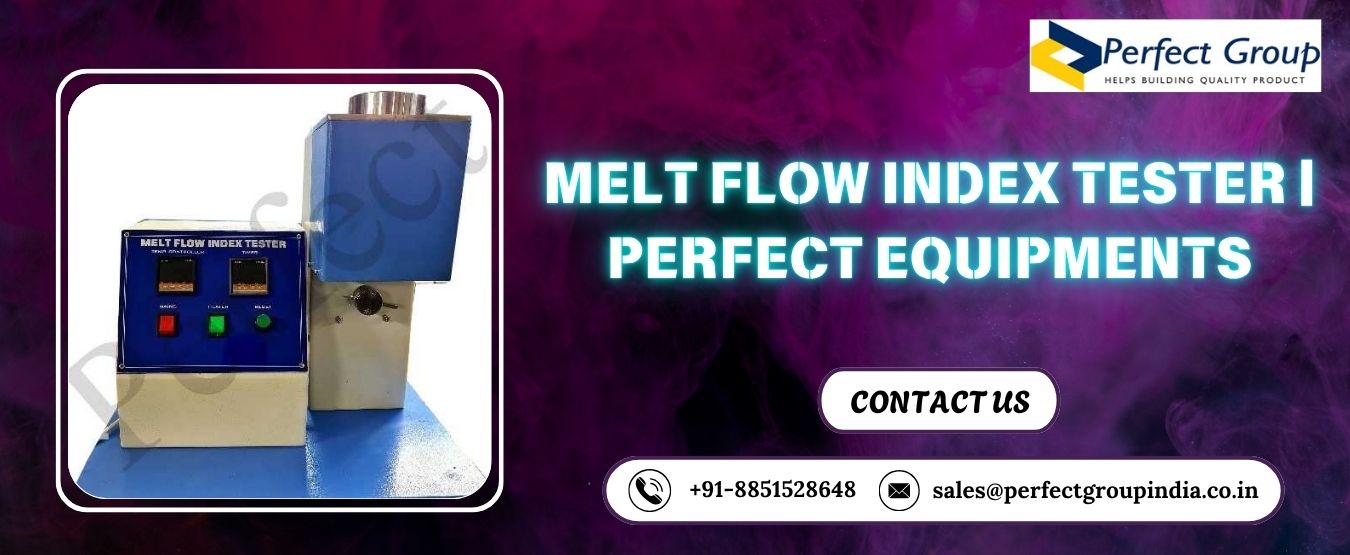
Melt Flow Index Tester | Perfect Equipments
Introduction
A Melt Flow Index Tester is a piece of lab equipment used to measure the melt flow properties of different thermoplastic materials under certain test conditions. It is used to measure raw material quality, polymer stability, batch comparison, production process control, material selection, quality control and research and development.
Controlled melt flow testing helps plastic producers and testing facilities in comparing material performance and finding differences that could affect processing. Effective results are dependent on proper sample preparation, controlled test conditions, proper instrument setup and stable operating processes.
What Is a Melt Flow Index Tester?
A Melt Flow Index Tester measures the flow properties of thermoplastic polymer materials under specific circumstances. The generated melt flow data allows scientists and manufacturers to analyse material quality and compare processing behaviour between grades or batches.
The proper test conditions are chosen by the polymer grade, test technique, temperature, applied load, sample preparation and instrument design. As a result, not all polymers should be treated the same.
Why Is a Melt Flow Index Tester Important?
Melt flow testing is a practical method to compare thermoplastic materials under specific conditions. It is very effective for:
-
Incoming raw material inspection
-
Material grade verification
-
Batch to batch comparison
-
Production quality control
-
Supplier material testing
-
Process troubleshooting
-
Product development
-
Research and development
However, melt flow testing should be viewed as a part of polymer character analysis instead of a full investigation of all material properties.
How Does a Melt Flow Index Tester Work?
The main testing technique is to heat a polymer sample and measure its flow through a defined die under an applied force.
-
Prepare a representative polymer sample.
-
Prepare the instrument according to the applicable test method.
-
Place the material into the heated barrel.
-
Allow the material to reach the required test condition.
-
Apply the specified load.
-
Allow molten polymer to pass through the test die.
-
Collect or measure the extruded material according to the procedure.
-
Record and evaluate the result.
The real strategy is dependent on the material, suitable method, instrument design and instructions from the manufacturer.
What Does a Melt Flow Index Tester Measure?
A Melt Flow Index Tester is used to measure the melt flow behaviour or rate of suitable thermoplastics under specific testing conditions.
Results can support:
-
Polymer grade comparison
-
Material consistency monitoring
-
Batch variation detection
-
Processing decisions
-
Incoming material checks
-
Investigation of production changes
A single melt flow result should not be used to calculate all of a polymer's mechanical, thermal and chemical properties.
Where Is a Melt Flow Index Tester Used?
Melt Flow Index Testing Equipment is used in industries where thermoplastic materials require controlled testing, such as:
-
Plastic and polymer manufacturing
-
Plastic extrusion
-
Injection moulding
-
Packaging manufacturing
-
Automotive plastic components
-
Electrical and electronic products
-
Consumer product manufacturing
-
Pipe and profile production
-
Plastic raw material testing
-
Quality control laboratories
-
R&D laboratories
Test conditions should always match the material and planned testing purpose.
What Factors Affect Melt Flow Test Results?
Reliable results need continuous preparation and controlled testing. Key features include:
-
Polymer type and grade
-
Molecular characteristics
-
Additives
-
Moisture
-
Sample preparation and conditioning
-
Test temperature
-
Applied load
-
Residence time
-
Die condition
-
Barrel cleanliness
-
Instrument condition
-
Sample handling
-
Operator technique
-
Applicable test method
Moisture and uneven conditioning can impact material behaviour and leftover polymer on the die or barrel might reduce reactivity. For meaningful batch comparisons, testing conditions should be comparable.
How Does Melt Flow Testing Support Quality Control?
A Melt Flow Index Tester can help manufacturers in detecting material flaws before it develops into a major production issue. Routine testing can support:
-
Incoming material inspection
-
Batch comparison
-
Production monitoring
-
Supplier comparison
-
Material grade verification
-
Process troubleshooting
-
Finished-material evaluation
-
Quality trend monitoring
-
Customer specification checks
Instead of following a standard schedule, the testing schedule should be based on material risk, production volume, process stability, customer needs, internal standards and any related testing regulations.
Which Standards or Test Methods Apply?
The suitable test technique is chosen by the polymer, test use, industry and material specifications. Laboratories can use techniques developed by organisations such as ISO, ASTM, BIS and other related material testing agencies.
Before purchasing a Melt Flow Index Testing Machine, confirm:
-
Applicable test methodSample preparation requirements
-
Test conditions
-
Material conditioning
-
Acceptance criteria
-
Reporting requirements
-
Calibration requirements
Specific conformity to standards should be verified based on the laboratory's actual testing needs.
How Do You Choose a Melt Flow Index Tester?
Start by choosing the polymer type, material grade, testing objective, suitable technique, necessary conditions, testing frequency and sample requirements. Then analyse:
-
Temperature-control capability
-
Load arrangement
-
Die configuration
-
Measurement system
-
Accuracy and repeatability
-
Digital display
-
Data recording
-
Result storage
-
Cleaning requirements
-
Calibration support
-
Maintenance requirements
-
Operator training
-
Technical assistance
-
Spare-parts availability
The best Melt Flow Rate Tester is one that matches the laboratory's materials and test technique rather than just offering the most features.
Why Choose Perfect Equipments for a Melt Flow Index Tester?
Perfect Equipments manufactures and distributes laboratory, material testing, polymer testing and quality control equipment for testing purposes. Its technique can be looked into when laboratories demand equipment that is specifically designed for their testing needs.
Relevant considerations include:
-
Laboratory focused testing equipment
-
Quality control applications
-
User focused operation
-
Practical equipment selection
-
Technical assistance
-
Calibration guidance
-
Maintenance guidance
-
Spare-parts support
-
Application-oriented testing solutions
When selecting a Melt Flow Index Tester manufacturer or provider, customers should consider technological fit, industry support, maintenance needs and compatibility with their test technique.
What Features Should You Compare Before Buying?
Before selecting Melt Flow Testing Equipment, compare:
-
Test method compatibility
-
Polymer compatibility
-
Temperature control
-
Load compatibility
-
Measurement capability
-
Accuracy and repeatability
-
Resolution
-
Die configuration
-
Digital display
-
Data recording
-
Calibration support
-
Ease of operation
-
Cleaning and maintenance
-
Build quality
-
Operator safety
-
Technical support
-
Spare-parts availability
These standards have a direct impact on the practicality and dependability of equipment in a professional testing laboratory.
How Should a Melt Flow Index Tester Be Maintained?
Proper maintenance helps to maintain stability and laboratory productivity.
-
Keep the instrument clean.
-
Clean the barrel and die according to manufacturer instructions.
-
Remove residual polymer using the right procedures.
-
Inspect relevant components regularly.
-
Follow the manufacturer's maintenance schedule.
-
Verify instrument performance periodically.
-
Maintain calibration records.
-
Train operators correctly.
-
Replace worn components when required.
-
Maintain service and maintenance records.
Conclusion
A useful tool to measure a thermoplastic melt flow behaviour for batch comparison, production control, material stability, polymer quality and laboratory testing is a Melt Flow Index Tester. The polymer type, material grade, suitable test technique, necessary conditions, accuracy and repeatable requirements, testing frequencies, adjustment needs, maintenance requirements and technical support should all be taken into consideration when choosing equipment for dependable results. When looking for laboratory testing and polymer equipment that meets these use standards, Perfect Equipments might be taken into consideration.