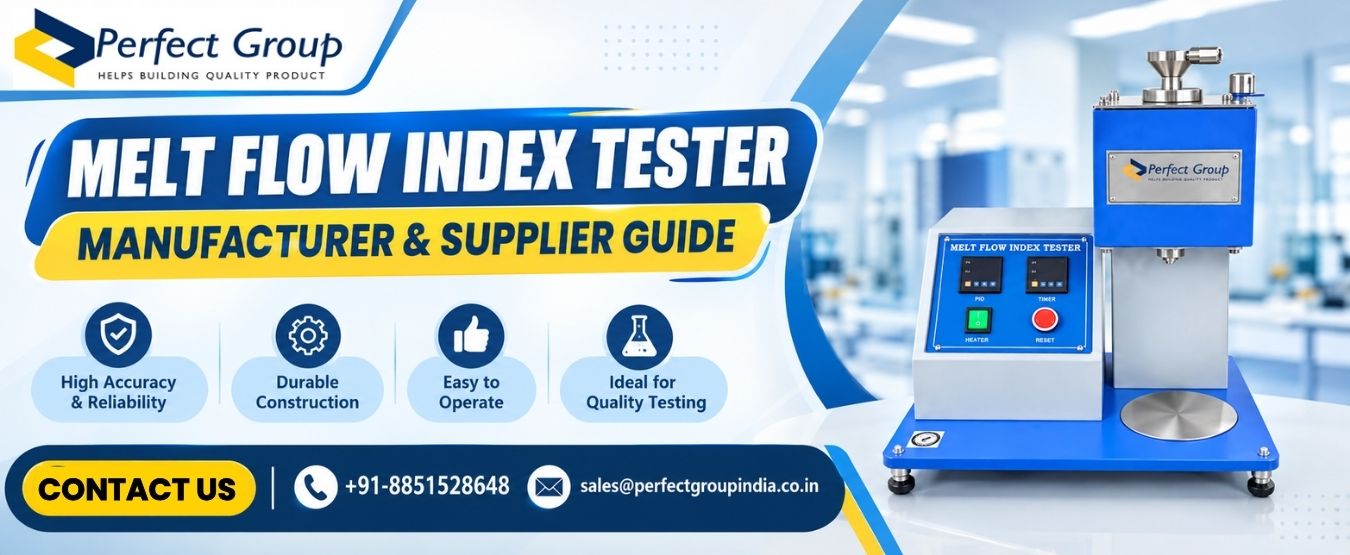
Melt Flow Index Tester Manufacturer & Supplier Guide
Introduction
A Melt Flow Index Tester is used in plastic testing labs to measure how easily molten thermoplastic flows at a given temperature and load. The test can check the Melt Mass-Flow Rate (MFR) and in some cases, the Melt Volume-Flow Rate (MVR) of plastic materials. ASTM D1238 and ISO 1133 are commonly used test standards for measuring melt flow rate. When buying this equipment, it is important to check the factors such as temperature control, test loads, die size, calibration, maintenance, safety features and the manufacturer’s support.
What Does a Melt Flow Index Tester Measure?
The method by which molten thermoplastic passes through a die at a set temperature and load over a specific period of time is measured using a Melt Flow Index Tester. The result is given in grams per 10 minutes and is known as the Melt Mass-Flow Rate (MFR).
ISO 1133-1:2022 also covers MVR or Melt Volume-Flow Rate. It measures the volume of molten plastic that flows through the die and reports the result in cubic centimeters per 10 minutes.
Which Standards Should a MFI Tester Follow?
The right standard depends on your polymer specification, customer requirements and the test method used for the material. ASTM D1238 and ISO 1133 cover similar melt-flow tests but there are some differences in how they describe and perform the test. So you should select the method required for your specific material.
-
ASTM D1238: Test method used to measure the flow of thermoplastic materials.
-
ISO 1133-1:2022: Covers MFR and MVR measurements at a specified temperature and load.
-
Procedure A: Measures the mass of the material coming out of the die over a set period.
-
Procedure B: Uses piston movement to determine the MFR or MVR.
ASTM D1238-26 is listed as the 2026 edition, so buyers should check which edition is required for their material specification before choosing a tester.
How Does a Melt Flow Index Tester Work?
A typical MFI Tester is heated to the required temperature before the prepared polymer sample is placed inside for a set preheating time. The tester uses a piston and weight to push the softened material through a small opening in the die. The material flow is then measured during the test.
The exact temperature, test load, die, timing and sample preparation depend on the material and the test standard being followed.
-
Set the temperature: Heat the tester to the temperature required for the polymer and test method.
-
Load the sample: Place the prepared polymer sample into the heated barrel.
-
Preheat: Allow the sample to heat for the specified time before taking the measurement.
-
Apply the load: Add the required piston and test weight.
-
Measure: Measure the material by mass or displacement, depending on the test method.
-
Report: Record the MFR or MVR with the test conditions.
What Features Should You Ask a Melt Flow Index Tester Manufacturer For?
A manufacturer should clearly explain the features included with the instruments and any optional features available. Different laboratories can have different polymer testing needs. Important points to consider include temperature control, test time, die size, test weights, cleaning, calibration and safe handling of heated parts.
-
Temperature control: Keeps the tester at the required test temperature.
-
Standard die: Provides the correct opening and shape for the material to flow through.
-
Weight set: Provides the test weights needed for different testing conditions.
-
Calibration support: Helps keep measurements accurate and reliable.
-
Safety features: Helps users handle the heated parts safely.
Perfect Group India mentions digital temperature control, automatic timing and standard features for its melt-flow testing equipment.
How Should You Choose a Melt Flow Index Tester Supplier?
Choosing a supplier should depend on the test method, polymer grades, testing frequency and type of measurement you need, not just the price.
Before buying a Melt Flow Index Tester consider these important points:
-
Temperature range: Confirm whether the available temperature range suits your polymer grades.
-
Test loads and die sizes: Make sure the required loads and die sizes are available for your testing needs.
-
Automatic or manual timing: Confirm whether the tester offers automatic timing or requires manual operation.
-
Calibration support: Find out if the supplier provides help with calibration.
-
Local service and spare parts: Verify whether spare parts and service support are available in your area.
-
Warranty and service: Review the warranty period and service terms before purchasing.
Perfect Group India provides information about equipment support, customization options and laboratory services on its website.
What Should You Verify Before Buying From a Melt Flow Index Tester Manufacturer?
Before purchasing, separate the technical specifications from the service requirements. This helps you understand the complete equipment requirements and avoid missing important details later.
-
Test method: Confirm whether your material requires the ASTM or ISO test method.
-
Temperature range: Check that the heating range is suitable for your polymer testing needs.
-
Load range: Make sure the supplied test weights cover the required testing conditions.
-
Measurement type: Decide whether you need to measure MFR, MVR or other related values.
-
Calibration: Ask how the tester is calibrated and how measurement accuracy is maintained.
How Can You Maintain a Melt Flow Index Tester?
Regular cleaning is important because leftover polymer can change the shape of the die opening and affect later laboratory tests. Follow the equipment instructions when cleaning and maintaining the heated parts, barrel, piston, die and temperature sensors.
-
Let the polymer cool: Allow the material to cool enough before removing it to reduce damage to the die.
-
Clean the die opening: Make sure no polymer residue remains inside the die.
-
Keep maintenance records: Record all calibration and maintenance work completed on the tester.
-
Follow proper procedures: Use the correct test weights and follow the recommended cleaning and maintenance steps.
Perfect Group India recommends cleaning the barrel and die after testing, checking the temperature sensors through calibration and using the correct test weights.
What Makes a Good Melt Flow Index Tester Manufacturer?
A reliable manufacturer should clearly explain the test method, machine specifications, accessories, calibration process, warranty, service terms and delivery details. For laboratories, technical support in local languages can make installation, training, spare-parts supply and service requests easier.
Perfect Group India provides laboratory testing equipment for plastic, packaging and melt-flow testing through its official website.
Conclusion
When buying a Melt Flow Index Tester it first identifies the required polymer test method, temperature, load, die and measurement type before looking at the price. ASTM D1238-26 is the current ASTM standard in 2026 and ISO 1133 that covers MFR and MVR testing procedures. Perfect Group India provides information about its testing equipment and after-sales support for laboratories that need melt-flow testing equipment. Before placing an order, ask the supplier to confirm the exact model specifications, test standard, supplied weights, die, calibration details, warranty and after-sales service.