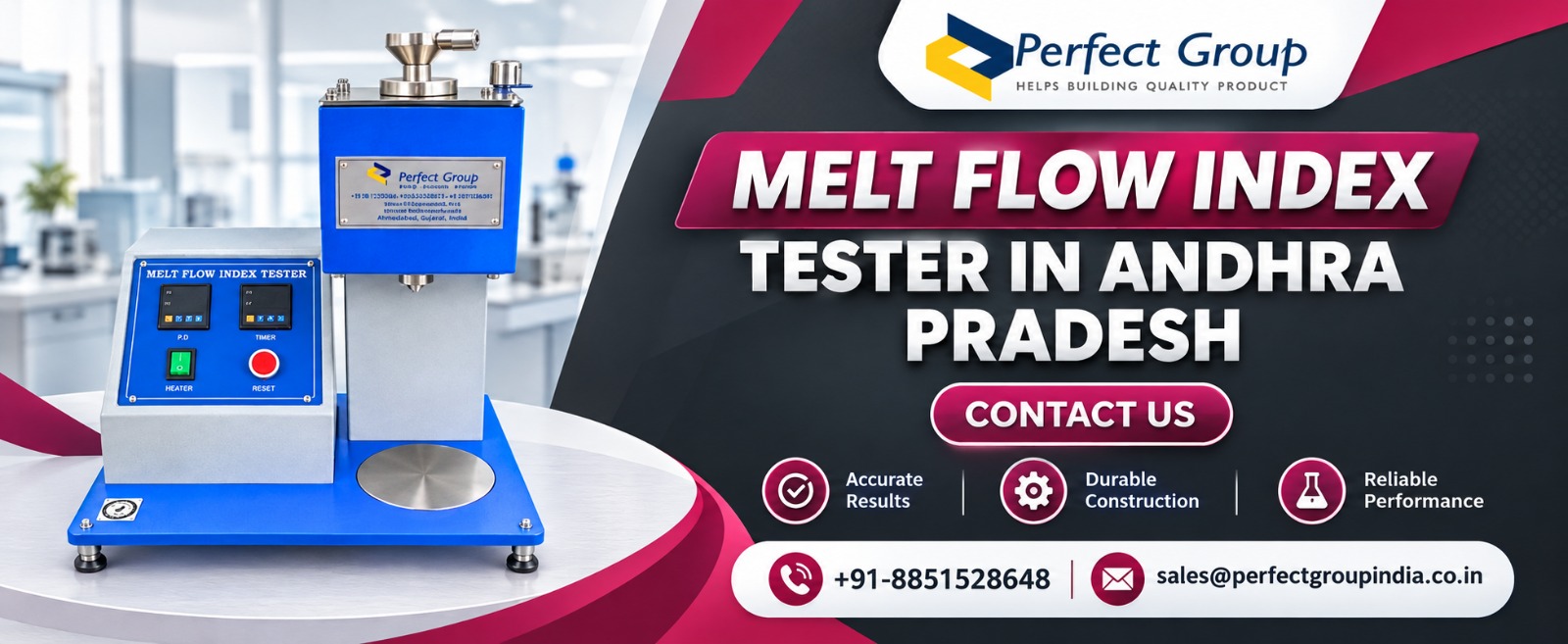
Melt Flow Index Tester in Andhra Pradesh
Introduction
Plastic testing laboratories use the melt flow Index tester in Andhra Pradesh to understand how thermoplastic materials flow when they are heated and subjected to a specified load. A MFI Tester can help compare material batches and support quality control during plastic manufacturing. Depending on the test method and measurement capability the results can be reported as Melt Mass Flow Rate (MFR) or Melt Volume Flow Rate (MVR).
What Does Melt Flow Index Tester in Andhra Pradesh Measure?
The amount of molten thermoplastic forced by a specified die under controlled conditions is measured by the melt flow index tester in Andhra Pradesh. The result is usually given as melt mass flow rate or MFR in grams per 10 minutes based on the test setup. If the equipment can measure displacement it can also calculate melt volume flow rate which is called MVR.
How Does the Melt Flow Index Tester Work in Andhra Pradesh?
A melt flow Index tester in Andhra Pradesh heats a sample inside a heated barrel before applying the specified load. The molten material then passes through a die and resulting flow is measured according to the selected test procedure and conditions.
A typical test involves these steps:
-
Sample preparation: The required thermoplastic sample is prepared according to the selected testing method.
-
Heating: Material is heated to the test temperature.
-
Loading: A defined load applies pressure through the piston.
-
Extrusion: Molten material passes through the die.
-
Measurement: Extruded material is measured over the required time.
-
Result: MFR or MVR is Recorded.
Because temperature, load, die dimensions and timing affect the result laboratories need to follow the selected method.
Which Standards Are Used for Melt Flow Testing in Andhra Pradesh?
Laboratories in Andhra Pradesh use ASTM D1238 and ISO 1133-1 to test the melt flow of thermoplastics with a melt flow Index tester in Andhra Pradesh. In those laboratories ISO 1133-1 explains how to determine Melt Flow Rate and Melt Volume Rate when temperature and load conditions are set.
ASTM D1238 explains how to measure melt flow rates of thermoplastics using a plastometer and includes various methods for flow measurement. The method, temperature, load and reporting format must follow the applicable material standard or the specific testing requirement.
Why Is Melt Flow Testing Important for Plastics?
Melt flow testing provides a number that helps compare batches of thermoplastic and helps track changes that happen during the manufacturing process. ASTM notes that the test is particularly useful for quality control and indicates uniformity of polymer flow from an individual process.
Useful results can include:
-
MFR expressed in g/10 min.
-
MVR expressed in cm³/10 min.
-
Flow comparison between material batches.
-
Data for selected quality control procedures.
-
Results for specified temperature and load conditions.
The result should not be treated as a complete description of a polymer because melt flow depends on material structure and test conditions.
What Should You Consider Before Buying the Melt Flow Index Tester in Andhra Pradesh?
When selecting a melt flow Index tester in Andhra Pradesh first identifies the materials, testing standards, temperature range, load conditions and type of result required. The instrument should suit the laboratory's actual testing method instead of being selected only from general machine features or price.
Important points include:
-
Testing standard: Confirm compatibility with the required ASTM or ISO method.
-
Temperature control: Look for suitable control for the intended thermoplastics.
-
Load arrangement: Confirm that required test loads can be used.
-
Measurement method: Decide whether MFR, MVR or both are needed.
-
Die setup: Verify that the required die arrangement matches your method.
-
Documentation: Ask for operating instructions and calibration related records.
Perfect Group India can be considered when laboratories are comparing equipment based on their testing requirements and required method.
Conclusion
A melt flow Index tester in Andhra Pradesh becomes most useful when the test conditions align with the material standard and the laboratory’s real testing needs. MFR or MVR results help laboratories to compare batches and identify changes in flow during production but the value should always be read with the temperature, load, die and test method used. Following the ASTM or ISO procedure and maintaining proper equipment records can make melt flow data more meaningful for quality control and material comparison.