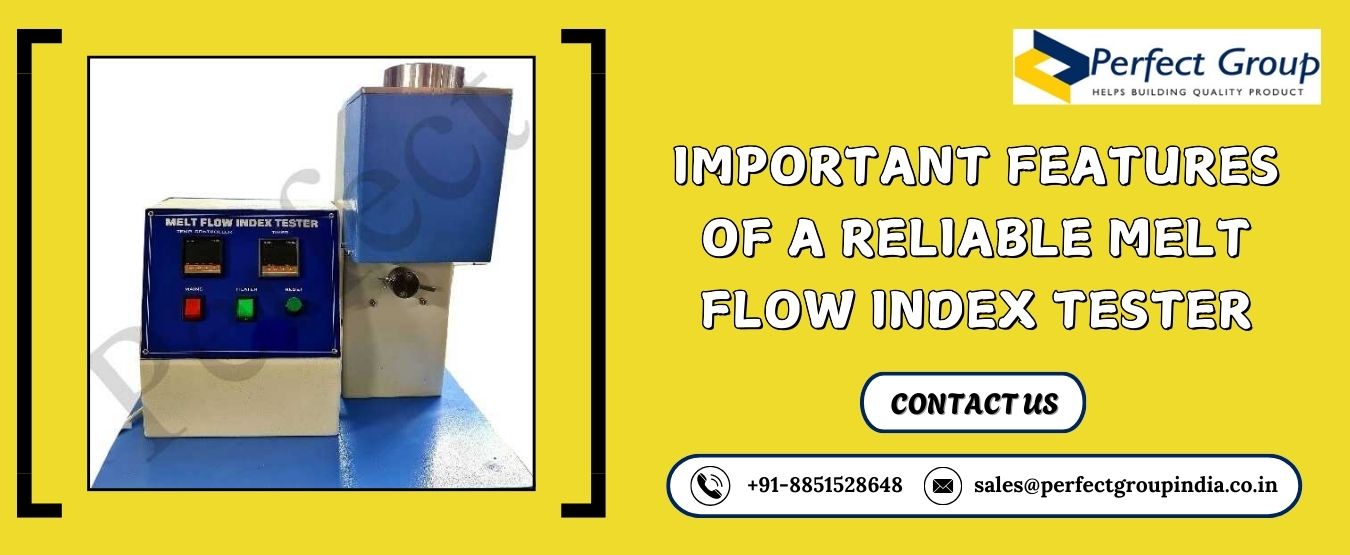
Important Features of a Reliable Melt Flow Index Tester
Introduction
In the plastics and polymer industry the Melt Flow Index Tester is one of the most trusted instruments for measuring the flow rate of molten polymers. This test helps manufacturers understand how easily a material can be molded, shaped or extruded into a final product. With quality demands increasing every year having a reliable instrument is not just a choice but a requirement. A good tester guarantees manufacturers produce strong durable and accurate products that meet market expectations.
When choosing a tester companies must pay attention to specific features that make the instrument quality. We explore these important features and highlight why selecting the right equipment matters for industries worldwide.
Why Melt Flow Index Testing Matters
Before we discuss features it’s important to know why this test is so widely used. Melt Flow Index Tester shows how a plastic material behaves when heated and pressed through a die. This data is important for:
• Analyzing processing conditions
• Comparing material quality
• Guarantee accurate performance in final products
• Meeting industry standards and compliance requirements
Features of a Reliable Melt Flow Index Tester
1. Stable Temperature Control
Accurate temperature control is the required of reliable results. Beauase polymer flow depends directly on heat, even small temperature variations can lead to errors. A good Melt Flow Index Tester comes with an accurate heating system and advanced controllers to maintain stable conditions throughout the test.
2. Strong Build and Design
Durability plays a big role in laboratory instruments. A reliable tester should have a strong body, high quality heating barrel and durable die assembly. This guarantees the device can handle accirate use without compromising performance.
3. User Friendly Operation
Modern industries need instruments that save time and reduce worker effort. A quality tester offers simple controls, clear display panels and easy to follow procedures. This not only reduase training requirements but also helps technicians achieve consistent results every time.
4. High Precision Load Mechanism
An important feature of any tester is its ability to apply weights correctly. An accurate loading system provides the molten material passing through the die with high pressure. This helps in generating repeatable results which is required when comparing materials from different batches.
5. Compliance with Standards
Trustworthy instruments always conform to international standards like ISO 1133 or ASTM D1238. Using a tester who follows these standards guarantees the results are reliable and widely recognized.
6. Efficient Cooling System
While heating is important, cooling also matters. A reliable tester provides cooling mechanisms for quick sample preparation and safe handling after tests. This feature increases productivity in labs where multiple samples are tested daily.
7. Low Maintenance Requirement
The best equipment are those that require small upkeep. A Melt Flow Index Tester designed with easy to clean parts, smooth surfaces and accessible items reduces downtime and reduces business expenses.
8. Advanced Digital Display
In today’s digital clear and accurate displays are important. A tester with a bright digital panel allows users to monitor temperature time and test progress without confusion.
9. Safety Features
A safe instrument is a reliable one. Over temperature protection, stable body design and insulated items avoid accidents in laboratories and guarantee durability trust in the device.
10. Trusted Brand Support
After sales support is an important part that is sometimes overlooked. Selecting a brand such as Perfect Group India guarantees suppliers not only the best instruments but also expert guidance, direction and technical support when required.
Benefits of Choosing the Right Tester
Investing in a reliable device offers several advantages such as:
• Consistent product quality
• Reduced production losses
• Better decision making in material selection
• Improved customer satisfaction
• Durable cost savings
These benefits prove that the tester is not just an instrument but a partner in achieving manufacturing excellence.
Conclusion
The role of a reliable testing equipment becomes clear when industries depend on the Melt Flow Index Tester in the middle of their manufacturing process to measure plastic quality and performance in the simplest way possible. A well designed tester helps manufacturers check flow rate, maintain high standards and deliver trusted results that support product strength.
Choosing the right equipment guarantees better control over materials and smooth workflow. With trusted solutions from Perfect Group India companies gain future value improved testing experience and better confidence in their manufacturing. This makes it easier to achieve quality targets without interruptions.
FAQs
Q1. What is the purpose of a Melt Flow Index Tester?
A Melt Flow Index Tester primary function is to measure the rate at which melted polymers flow under particular load and temperature conditions. This helps in material quality analysis, processing suitability and guaranteeing the finished product satisfies performance requirements.
Q2. How often should a Melt Flow Index Tester be calibrated?
It is best to calibrate once a year or as the manufacturer suggests. Quality control requires accurate and reliable data which is guaranteed by routine calibration of the tester. Professional calibration and maintenance help is provided through partnerships with companies such as Perfect Group India.
Q3. Why is temperature control important in Melt Flow Index Testing?
Temperature control is important because polymer flow is highly responsive to heat variations. Results can be greatly affected by even small changes. A trustworthy tester keeps temperatures maintained, guaranteeing accuracy as well as reliability in test results.
Q4. What industries use Melt Flow Index Tester?
The automotive, packaging, plastics manufacturing and research industries all make regular use of these testers. To guarantee that products fulfill performance and safety requirements they help with the analysis of materials such as polyethylene, polypropylene and other thermoplastics.