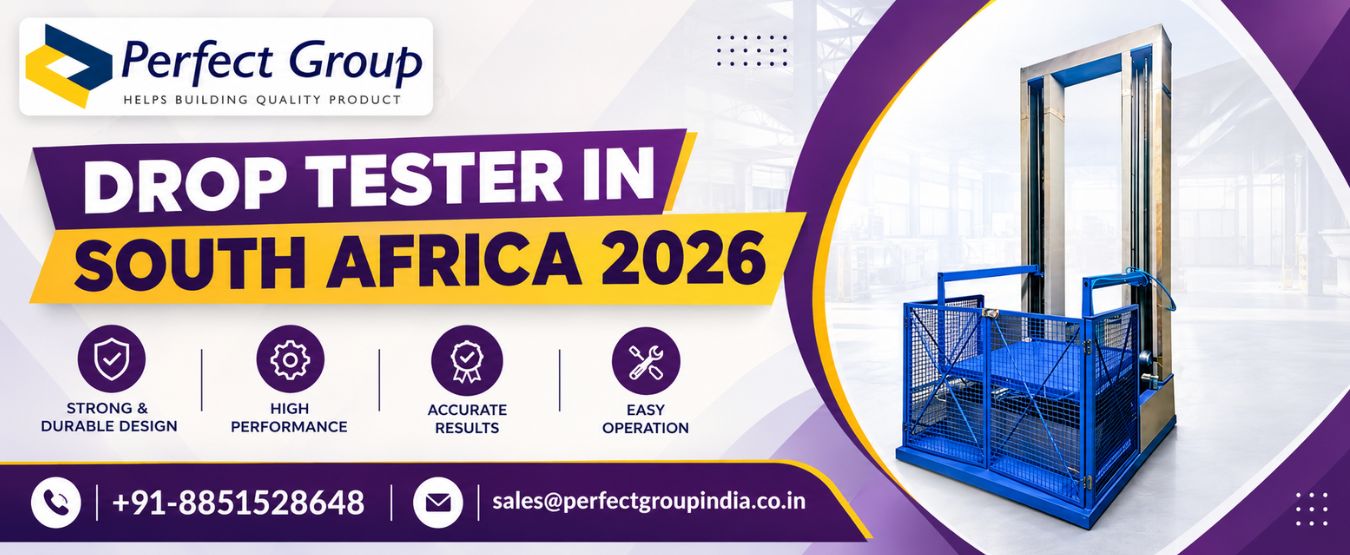
Drop Tester in South Africa 2026
Introduction
Businesses looking to improve packaging quality can use a Drop Tester in South Africa to understand how products handle sudden drops during transport. This instrument helps manufacturers find weak packaging and improve protection before shipping goods. In 2026, companies can compare testing methods, machine types and relevant standards to choose suitable equipment. Understanding these factors helps businesses select an instrument that matches their products, testing needs and budget.
What Is a Drop Tester in South Africa and How Does It Work?
A Drop Tester in South Africa releases a product or packed sample from a set height into a hard surface to see how well the packaging protects it. This helps manufacturers understand whether their packaging can handle common drops during transport.
The sample is placed in the instrument, the required height is set and the release system allows it to fall. After impact, the user records any damage and compares the results with the required limits.
Why Do South African Manufacturers Need Drop Testing Equipment?
Manufacturers use Drop Tester in South Africa to find out whether their packaging can protect products during handling, storage and delivery. The results can show weak points, poor padding, loose closures, or other problems that need fixing.
Common reasons for drop testing include:
-
Reducing damage during product delivery.
-
Comparing different packaging materials.
-
Testing protective padding and inserts.
-
Finding weak points in package designs.
-
Improving packaging before mass production.
The right test depends on the product, package design, delivery conditions and testing rules that apply to the product.
Which Industries Use Drop Testers in South Africa?
A Drop Tester in South Africa can help businesses in many industries test how well their packaging protects products. The instrument depends on the sample's size, weight, design and the type of test required.
-
Electronics: Testing packaging for electronic devices and accessories.
-
Food and drinks: Testing outer packaging used to protect packed goods.
-
Pharmaceuticals: Studying packaging used to protect medicines during transport.
-
Consumer goods: Testing boxes containing household and personal care products.
-
Manufacturing: Comparing packaging designs before products are sent to customers.
Drop testing alone does not prove that a product is safe or follows every required rule. The results must be compared with the correct testing method and accepted limits.
What Types of Drop Testing Instruments Are Available?
Different instruments support different sample sizes, weights, drop heights and release methods. Choosing a suitable instrument helps users test their products properly and avoid buying equipment that does not fit their needs.
-
Single-wing drop tester: Uses a support and release system designed to drop samples in a controlled way.
-
Double-wing drop tester: Uses a different support arrangement, depending on the instrument's design.
-
Electronic drop tester: Uses powered controls to manage the drop process.
-
Custom drop testing instrument: Can be designed for special sample sizes, weights, or testing needs.
Before buying, ask about weight limits, available drop heights, sample support, safety features and the space needed to install the instrument.
Which Standards Apply to Drop Testing in South Africa?
Testing standards depend on the product and the reason for testing. ISO 2248 describes a method for dropping a filled transport package vertically, while ASTM D5276 covers free-fall drop testing of loaded containers.
South African businesses should confirm which standard applies and whether its latest version is required. Buying an instrument alone does not prove that a package follows a standard. Sample preparation, drop height, testing steps and written results must also follow the selected method.
How Can Businesses Choose the Right Drop Tester in South Africa?
Businesses should first decide which product or package they need to test. A Drop Tester in South Africa should suit the sample's weight, size, required drop height and testing method.
Important things to consider include:
-
Weight limit: Choose an instrument that can hold your heaviest sample.
-
Drop height: Make sure the instrument supports the required height.
-
Release system: Look for a system that releases samples safely.
-
Safety features: Ask about guards, controls and safe operating instructions.
-
Documents: Request the user manual, instrument details and calibration information where needed.
-
After-sales support: Ask about installation, training, repairs and spare parts.
Perfect Group India can help businesses compare equipment options and understand which features suit their needs. Buyers should confirm delivery, service and technical support for installations in South Africa before placing an order.
Where Can You Buy a Drop Tester in South Africa?
Businesses can contact packaging equipment suppliers, laboratory equipment dealers, or manufacturers that ship testing instruments to South Africa. Compare instrument details, prices and service support before making a final decision.
Perfect Group India is one supplier businesses can contact to ask about drop testing instruments and available models. Request a written quotation that covers the instrument, extra parts, delivery charges, installation, warranty and possible import costs.
How Should a Drop Test Be Performed Correctly?
A useful drop test needs a clear plan and samples prepared in the right way. The plan should state the drop height, sample position, number of drops, impact surface and acceptable damage limits.
-
Prepare the samples and record their details.
-
Set the required height and sample position.
-
Secure the sample and clear the area below.
-
Release the sample using the correct method.
-
Record the results and compare them with the set limits.
Perfect Group India can discuss equipment options, but the testing team must follow the correct method and keep clear records of the results.
Conclusion
Choosing a Drop Tester in South Africa involves more than comparing prices and instrument features. Businesses should select equipment based on their product, package size, weight, testing standards and reporting needs. The right instrument can help find weak packaging and improve product protection before goods are shipped. Perfect Group India can provide equipment information, subject to confirmation of available models and support in South Africa. Good results depend on suitable equipment, clear testing steps, trained staff and well-defined limits for acceptable damage.