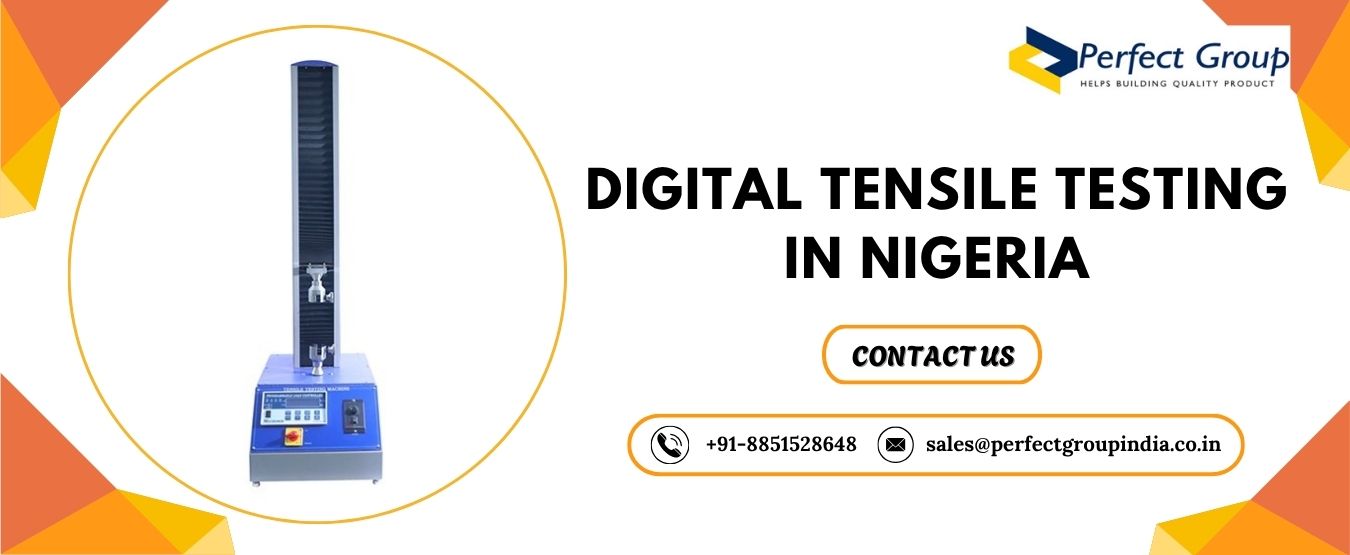
Digital Tensile Testing in Nigeria
By allowing companies to ensure quality, durability and conformity to international standards, digital tensile testing in Nigeria is quickly changing the material testing industry. The need for accurate and dependable testing equipment is increasing greatly as industrialisation spreads throughout sectors including manufacturing, packaging and construction.
Understanding Digital Tensile Testing
Digital Tensile Testing in Nigeria is the method of measuring the strength and flexibility of materials using modern digital machinery. These devices use controlled force to a sample until it breaks, then measure properties including tensile strength, length and deformation.
Modern digital tensile testing devices include digital displays, load cells and automated data recording systems, leading to very accurate and repeatable measurements.
Plastics, rubber, metals and packaging industries depend heavily on testing equipment in Nigeria to verify product quality and conformity with international standards such as ASTM and ISO.
Importance of Digital Tensile Testing in Nigeria
The developing manufacturing environment has made Digital Tensile Testing in Nigeria important for quality assurance. Manufacturers have to guarantee that their materials are capable of handling operating stress and environmental factors.
Key benefits include:
-
Ensuring product durability and safety
-
Supporting research and development
-
Enhancing compliance with global standards
-
Reducing product failure risks
Tensile testing is often used in Nigerian labs and industrial facilities to measure material performance under stress situations, which is important for engineering uses.
Market Trends and Growth Opportunities
Global material testing equipment trends impact the Nigerian Digital Tensile Testing market. According to current market research, the digital tensile testing machine business continues to grow due to high demand in industrial and research uses.
Globally, the market is expected to grow greatly by 2030, driven by industries including construction, automotive and aerospace.
In Nigeria, this growth is reflected in:
-
Increased adoption of advanced testing technologies
-
Rising investments in infrastructure and manufacturing
-
Demand for quality control in exports
Types of Digital Tensile Testing Machines
Digital Tensile Testing in Nigeria includes a variety of equipment types designed for specific uses. The maximum amount that widely used varieties include:
1. Single Column Machines
Perfect for low-impact situations like plastics and packaging materials.
2. Double Column Machines
Metals and heavy-duty materials are tested using high-force methods.
3. Universal Testing Machines (UTM)
These flexible devices, which are capable of performing tensile, compression and bending tests, are commonly used in a variety of industries.
Applications Across Industries
Digital Tensile Testing in Nigeria is commonly used in a variety of sectors, including
-
Construction: Testing steel and concrete strength
-
Packaging: Evaluating film and material durability
-
Automotive: Ensuring component reliability
-
Healthcare: Testing medical devices and implants
These kinds of uses show how Digital Tensile Testing in Nigeria supports innovation and safety throughout multiple industries.
Why Choose Perfect Group India?
Perfect Group India differentiates itself as a reputable source of innovative testing equipment. With a strong global presence, the business provides high-quality digital tensile testing devices that are customised to specific industrial requirements.
Perfect Group India ensures:
-
Precision-engineered equipment
-
Compliance with international standards
-
User-friendly digital interfaces
-
Excellent after-sales support
Key Features to Consider
When purchasing equipment for Digital Tensile Testing in Nigeria, consider the following elements.
-
High accuracy and repeatability
-
Digital load indicators
-
Robust construction
-
Advanced software integration
-
Safety features like overload protection
Modern machines use digital control systems and sensors to give exact measurements and real-time data processing.
Future Outlook
The future of Digital Tensile Testing in Nigeria is bright, with greater usage of automation and smart testing technology. As businesses focus on quality and conformity, the demand for advanced testing equipment will increase.
Emerging trends include:
-
Integration with IoT and data analytics
-
Automation in testing processes
-
Increased focus on sustainability and material innovation
These improvements would strengthen the function of Digital Tensile Testing in Nigeria in guaranteeing product quality.
Conclusion
Digital tensile testing in Nigeria is an important component of modern industrial quality control. With increasing industrialisation and worldwide trade demands, the need for accurate and dependable testing solutions is greater than ever.
Businesses that use innovative technology from reputable suppliers such as Perfect Group India could boost product quality, ensure conformity and remain competitive in the global market. As technology advances, Digital Tensile Testing in Nigeria will remain an important source of industrial progress and innovation.