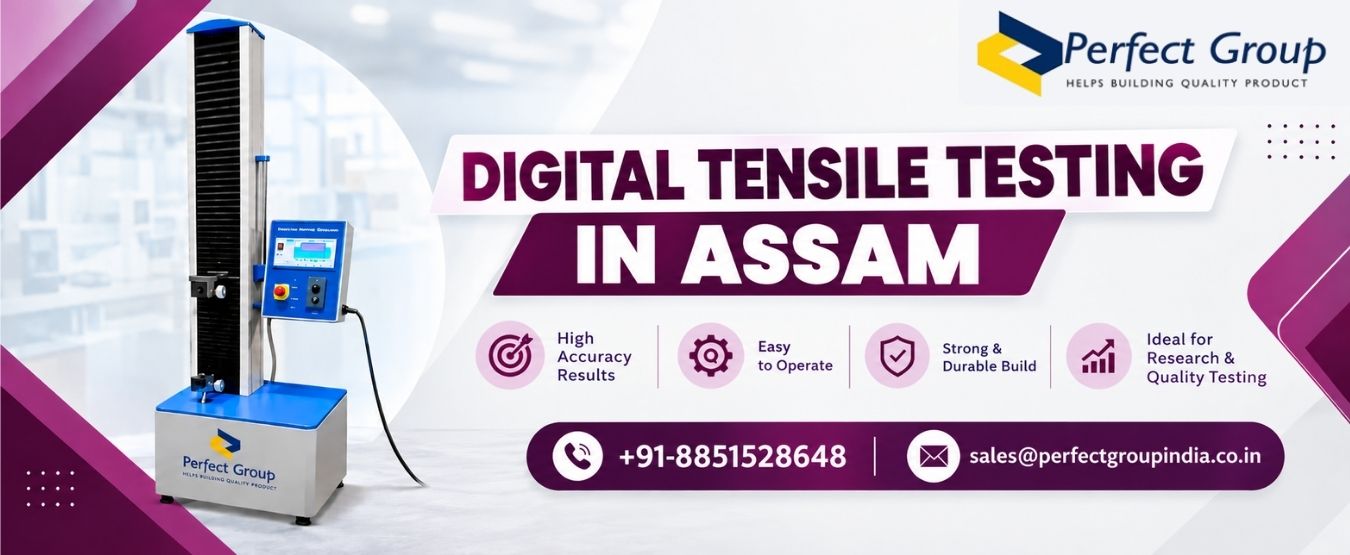
Digital Tensile Testing in Assam
Introduction
Many laboratories and businesses use Digital Tensile Testing in Assam to measure the strength of a material when a pulling force is applied. A digital tensile tester records force, stretching and other readings during the test. This makes it easier to understand how a sample behaves under pressure. This guide explains how the test works, which materials can be tested, common standards, useful instrument features, buying points and supplier support for laboratories and businesses looking for suitable testing equipment in Assam.
What Does Digital Tensile Testing in Assam Actually Measure?
When laboratories use Digital Tensile Testing in Assam, a sample is placed between two grips and pulled at a set speed until the required test point or break.
The instrument records the force used and how much the sample stretches during the test. These readings help users understand the strength and stretching ability of the material.
The final result can depend on the sample size, material type, grips, pulling speed, instrument capacity and test conditions.
Which Materials Can This Testing Cover?
A suitable tensile testing instrument can be used for plastics, films, sheets, composites and some metal or rubber samples.
-
Plastic samples made through moulding.
-
Plastic films and thin sheets.
-
Hard and semi-hard plastic materials.
-
Fibre-reinforced plastic materials.
-
Selected metal samples.
-
Rubber samples with suitable grips.
ISO 527-3:2018 covers plastic films and sheets below 1 mm thickness, while ISO 527-4:2023 covers fibre-reinforced plastic materials.
Which Standards Apply to Digital Tensile Testing in Assam?
Before buying Digital Tensile Testing equipment, first find out which standard is needed for your material and test.
-
ISO 527-1: General rules for testing plastics.
-
ISO 527-2: Testing moulding and extrusion plastics.
-
ISO 527-3: Testing plastic films and sheets.
-
ISO 527-4: Testing fibre-reinforced plastic materials.
-
ASTM methods where the customer or laboratory requires them.
ISO lists ISO 527-1:2019 for the general rules of plastics testing and ISO 527-2:2025 for moulding and extrusion plastics.
A laboratory using Digital Tensile Testing in Assam should confirm the required test method before buying equipment.
What Features Should a Digital Tensile Testing in Assam Instrument Have?
For Digital Tensile Testing, the right features depend on the material, sample size, force needed and test speed.
-
Load cell: Measures the pulling force.
-
Digital display: Shows test readings clearly.
-
Speed control: Sets how fast the sample is pulled.
-
Grips: Hold the sample firmly during testing.
-
Software: Helps show graphs, results and reports.
-
Safety system: Helps protect the operator during testing.
-
Extensometer: Measures stretching when required.
Perfect Group India can help you understand which features are suitable for your testing needs.
How Should a Buyer Choose the Instrument?
Start by knowing what material you want to test and which test method you need to follow. Then look at the force, speed, sample size and stretching range required.
Keep these details ready before asking for an instrument quotation:
-
Material and sample type.
-
Required testing standard.
-
Highest force expected.
-
Required pulling speed.
-
Sample size.
-
Required grips and accessories.
-
Software and report requirements.
-
Installation and training needs.
Perfect Group India can explain the instrument setup and available support. Compare the technical details before choosing an instrument only because its price is lower.
What Affects The Price?
The price can change depending on instrument capacity, frame size, software, grips, extensometer and other accessories. A basic laboratory instrument can cost less than a higher-capacity testing instrument.
For buyers searching Digital Tensile Testing in Assam, it is useful to share the material, sample size, force, speed, standard and required accessories with the supplier.
This helps the supplier suggest an instrument that matches the actual testing work.
Perfect Group India can also explain the main differences between available instrument options.
How Does Digital Reporting Help Laboratories?
A digital tensile testing instrument gives the operator an easy way to record force and stretching during a test. Depending on the software, it can show graphs, calculated results and saved test records.
Digital recording means the operator does not have to write down every reading manually. Still, the instrument needs proper calibration and samples must be prepared correctly.
Good test results depend on the load cell, grips, software, sample size, pulling speed and selected test method.
Perfect Group India can explain the available software and report options according to the laboratory's needs.
What Should Buyers Ask Before Ordering?
Before ordering, talk about your exact testing work with the supplier. This helps you understand whether the instrument will suit your samples and required test method.
-
Testing standard: Which standard can the instrument follow?
-
instrument capacity: What force range is suitable?
-
Grips: Which grips come with the instrument?
-
Training: Is instrument training available?
-
Service: What support is available after purchase?
Ask the supplier to clearly mention the instrument model, included parts, software, service and other important details in the quotation.
Why Does the Right Setup Matter?
A suitable instrument setup helps the laboratory follow its selected test method and get useful readings from properly prepared samples.
Before buying, consider the sample size, expected force, stretching range, grips, speed, software and required standard together. ISO guidance also covers sample size, gripping, conditioning and extensometer settings.
For a laboratory planning Digital Tensile Testing in Assam, deciding these details first can make instrument selection much easier.
Conclusion
The Digital tensile testing in Assam offers businesses and labs an easy way to understand how a material responds to controlled stress. The right instrument can record force and stretching clearly, helping users study material performance and prepare useful test reports. Before buying, focus on the material, sample size, required standard, instrument capacity, grips, software and service support. A clear understanding of these needs makes it easier to select equipment that suits the laboratory's actual testing work.