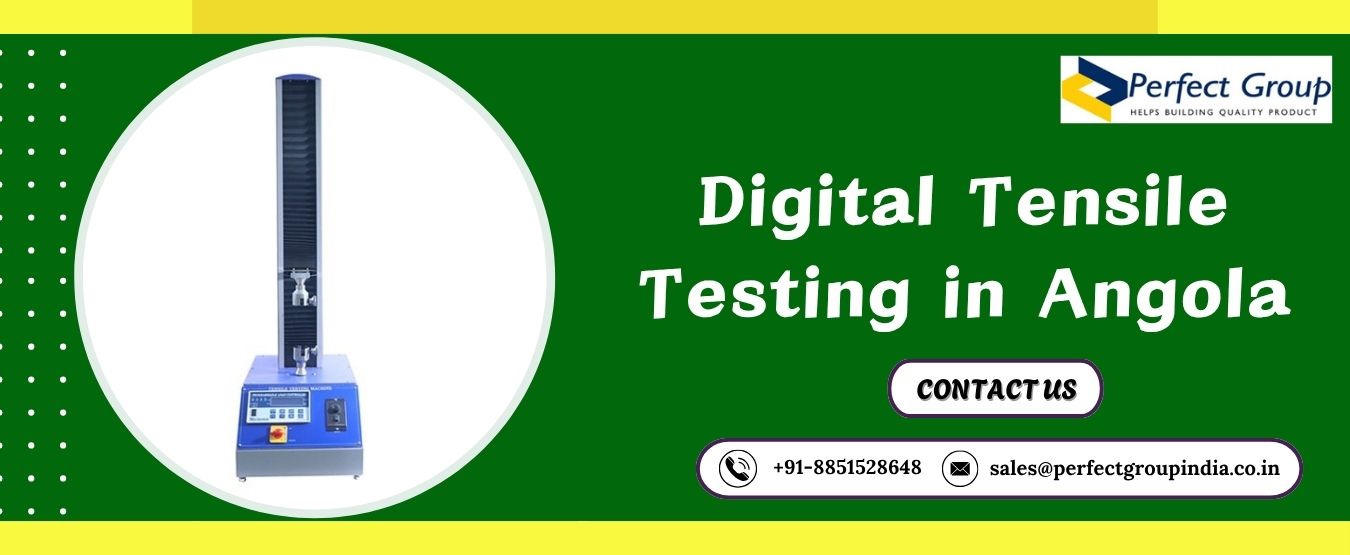
Digital Tensile Testing in Angola
AI Overview Summary
Digital tensile testing in Angola has grown more and more important in the construction sector, oil and gas, mining and manufacturing industries. Modern digital technologies improve material testing quality, simplify conformance reporting processes and conform to international standards such as ASTM and ISO. Businesses that use tensile testing benefit from increased safety, authenticity, less material waste and more productivity in operations. AI-powered analytics are changing the market by calculating quality and automating reporting.
Introduction
Digital tensile testing in Angola is growing in importance as companies modernise quality control methods and conform to worldwide manufacturing standards.
From infrastructure projects to petroleum operations, businesses are growing increasingly dependent on testing devices to confirm the strength, durability and dependability of materials before delivery. The change not only improves safety and operational effectiveness, but also allows Angolan businesses to be competitive in global supply chains.
As industrial investment in Angola increases, so does the demand for accurate, data based material testing.
What Is Digital Tensile Testing in Angola?
Digital tensile testing in Angola is a material testing method that measures how a material behaves when pushed under controlled stress until it breaks or deforms.
Modern digital tensile testing devices measure highly accurate measurements during the test process using computerised systems, sensors and software.
These systems typically evaluate:
-
Tensile strength
-
Yield strength
-
Elongation
-
Elasticity
-
Fracture point
-
Material deformation behavior
Unlike previous analogue systems, digital technologies continuously record information and analyse data.
Why Does Tensile Testing Matter?
Tensile testing is important because material failure can result in costly repairs, structural damage and safety concerns.
Tensile testing is used by industries to make sure that materials fulfil performance requirements before they are used in everyday situations.
Tensile testing is often used in different sectors in Angola, including:
-
Oil & Gas: Pipeline and component integrity testing
-
Construction: Steel and concrete reinforcement testing
-
Mining: Equipment durability verification
-
Manufacturing: Product quality assurance
-
Energy: Cable and structural component testing
Why Is Digital Tensile Testing in Angola Growing?
There has been a rise in Digital Tensile Testing in Angola as infrastructure and industrial developments require stronger quality control processes.
Angola's economy continues to expand beyond oil production. As the manufacturing, construction and mining industries grow, organisations will increasingly require internationally approved testing techniques.
Many market conditions are increasing usage:.
Increasing Infrastructure Development
Large scale infrastructure projects need reliable building materials.
Engineering standards require tensile testing of steel that supports bars, cables, connectors and structural elements.
Contractors use digital testing methods to guarantee consistent performance throughout huge projects.
International Compliance Requirements
Export focused businesses should often conform with:
-
ASTM standards
-
ISO standards
-
DIN specifications
-
EN testing requirements
Growing Industrial Automation
Industry 4.0 technologies are being progressively used in Angolan factories and industrial facilities.
It is easier to include digital tensile testing with:
-
ERP systems
-
Laboratory Information Management Systems (LIMS)
-
Cloud reporting platforms
-
Predictive maintenance software
How Does Digital Tensile Testing in Angola Work?
Digital tensile testing in Angola involves adding a controlled pulling force to a material sample while sensors record how the material responds.
The method is highly standardised to achieve reliable and dependable output.
Typical Testing Process
1. Sample Preparation
A material sample is sliced according to testing requirements.
The size and form must conform to specified requirements.
2. Machine Setup
Specially designed grips are used to secure the sample within the testing equipment.
Digital systems automatically adjust force and stretch sensors.
3. Force Application
The machine steadily imparts tensile stress on the sample till it bends or breaks.
Real time software tracks:
-
Load
-
Stress
-
Strain
-
Elongation
4. Data Analysis
The program provides graphs, reports and performance data instantly.
Most current processes automatically save data for future audits and checks for conformity.
What Are the Benefits of Digital Tensile Testing in Angola?
Digital tensile testing in Angola is quicker, more accurate and traceable than manual procedures.
This is especially useful in businesses where quality failures might result in security risks or financial losses.
Key Advantages
Higher Accuracy
Digital sensors reduce human error while increasing measuring accuracy.
This is necessary for key infrastructure and engineering related projects.
Faster Reporting
Modern software delivers instant test reports.
Engineers can right away accept or reject items, reducing delays.
Better Compliance Documentation
Digital systems automatically store:
-
Test results
-
Calibration records
-
Operator information
-
Time stamped reports
This simplifies regulatory audits.
Improved Data Traceability
Cloud connected testing solutions allow organisations to keep long term material performance data.
Traceability is increasingly important for multinational projects.
Reduced Material Waste
Improved testing accuracy removes wasteful rejection of suitable materials.
This increases cost savings.
What Industries Need Digital Tensile Testing in Angola the Most?
In Angola, digital tensile testing is now used mostly in oil and gas, construction, mining and manufacturing.
Every industry presents unique quality control issues.
Oil & Gas Sector
Angola is one of Africa's leading oil producers.
Pipelines, drilling components and offshore structures require strict tensile testing.
Testing helps prevent:
-
Metal fatigue
-
Structural failure
-
Pressure related damage
Construction Industry
Tensile tested steel and strengthening components are commonly used in construction work.
Digital testing improves trust in structural dependability.
Mining Operations
Mining equipment operates under extreme stress conditions.
Testing ensures durability of:
-
Chains
-
Fasteners
-
Structural supports
-
Mechanical components
Manufacturing Sector
Manufacturers use tensile tests to guarantee product quality and reduce failure rates.
This is especially important for export focused manufacturing plants.
How Is AI Changing Digital Tensile Testing in Angola?
Artificial intelligence is changing Digital Tensile Testing in Angola by improving predictive analytics, abnormal detection and automated quality control.
Traditional testing focused mostly on pass/fail results.
Modern artificial intelligence (AI) systems analyse trends across hundreds of test outcomes.
Emerging AI Applications
Predictive Material Performance
AI models are able to identify trends that point toward possible material breakdowns.
This allows businesses to avoid errors before manufacturing begins.
Automated Quality Classification
Machine learning methods can detect abnormal stress behaviour automatically.
This reduces inspection time.
Smart Reporting
Software based on AI can produce conformity reports and suggestions immediately.
Predictive Maintenance
Testing machines can use AI diagnostics to predict upcoming maintenance requirements.
This reduces downtime.
What Should Companies Look for in a Digital Tensile Testing in Angola?
When choosing a testing system, Angolan companies should prioritise accuracy, legal support, software compatibility and long term scalability.
Not every machine has the same capabilities.
Important Buying Factors
-
Load accuracy for precise measurements
-
Software integration for simplified reporting and analytics
-
Standards compliance support for ISO and ASTM testing
-
Data storage capabilities for long term traceability
-
Automation features to reduce labor requirements
-
Calibration support to maintain long term accuracy
Conclusion
Digital tensile testing in Angola is becoming an important part of industrial modernisation and quality control.
As businesses look for stronger standards, safer infrastructure and more effective operations, digital testing solutions are changing from optional upgrades to strategic necessity.
Early use of improved tensile testing technologies is expected to benefit companies in:
-
Product reliability
-
Regulatory compliance
-
Operational efficiency
-
International competitiveness
Digital accuracy, data transparency and AI based analytics will be important components of Angola's industrial quality control in the future.